


Fredericksburg, Virginia witnessed history unfold and is still leading the way. Visit Ferry Farm, George Washington’s childhood home to “Freedom, a Work in Progress,” a free self-guided trail, telling how freedom progressed from the Civil War through the Black Lives Matter era. As a writer who loves history, this is a special place since there is so much women’s history here.
The writer was hosted.
Trolley Tour

Why go: Trolley Tours of Fredericksburg is a way to get an overview of Fredericksburg. Our driver, Heidi, was very knowledgeable. She told us Fredericksburg, established in 1728, was named for the son of English King George II. Frederick died young and never became King but his son became George III, England’s king when America gained its independence.
What not to miss: We toured a 40-block area of Fredericksburg that’s listed on the National Historic Register. These are some sites Heidi pointed out .
- Tour begins at the Visitor Center and passes many historic places in the Historic District and along the Rappahannock River.
- Rising Sun Tavern Museum, which was once the home of Washington’s younger brother Charles and his family. They lived in the house from 1760 to 1781. It then became a colonial tavern for about 35 years until it lost its liquor license.
- , where it is believed Mary Washington is buried.
- Fielding Lewis’ store is one of the oldest commercial buildings in America. It was built by his father in 1749. Lewis was married to Washington’s sister, Betty.
- The James Monroe Museum and Memorial Library is the site of his law office. It contains more personal belongings of President and Mrs. Monroe here than anywhere else in America.
- There is an art installation called “Otterly Amazing.” At the Visitor Center, you can get a copy of The Scavenger Hunt for clues on where to find them.
Get 365 days of travel inspiration delivered right to your inbox!
Tour the Fredericksburg Area Museum
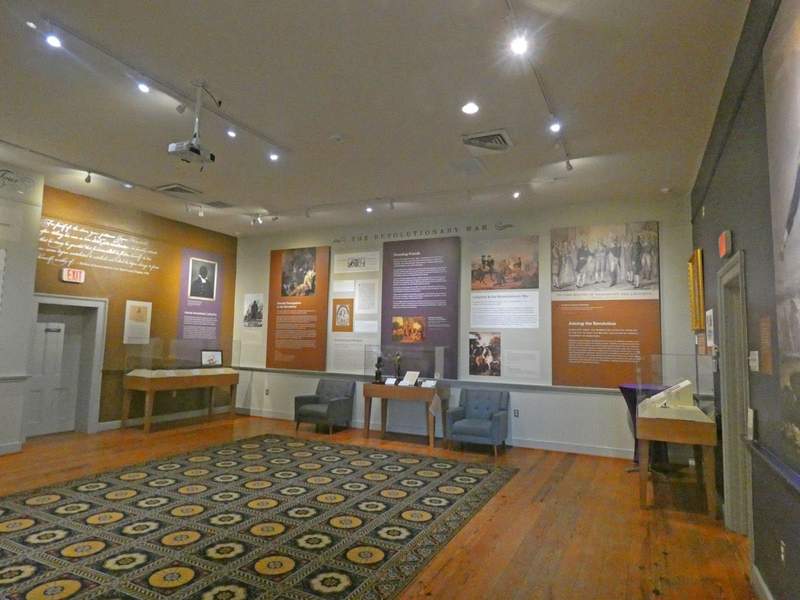
Why go: Fredericksburg Area Museum is in the restored 1816 Town Hall and Market House. The exhibitions span over 10,000 years, from Rappahannock and Powhatan tribes and colonial settlement through Civil War-era life to modern-day Black Lives Matter.
SheBuysTravel Tip: Skip the airport stress — Lyft’s On-Time Pickup Promise guarantees your scheduled ride shows up within 10 minutes of your pickup time. If it doesn’t? You’ll get Lyft Cash. You can schedule up to 90 days in advance and even lock in your rate. Use code SBT25 to save 25% off ONE scheduled ride to the airport.
What not to miss: A former slave auction block and its story is on the second floor. There’s a large exhibit about Lafayette’s visit and several about the Revolution. There’s an elevator, making the museum easily accessible. It‘s one of the free museums.
Walking Ghost Tour
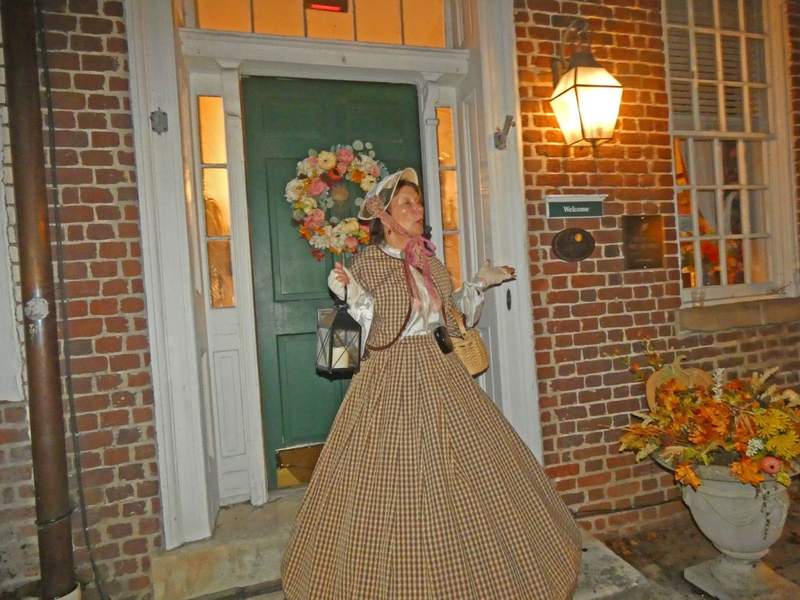
Why go: Kim, with Fredericksburg Hauntings Ghost Tours, led us on a tour of many haunted sites around town.
What not to miss: There are so many sites she shows you, but these are some of the most interesting.
-
She began the tour at Ironclad Inn & Distillery built in 1824. She told of sightings in rooms 103, 203 and 208.
-
The Central Library, which later was a school from 1908 to 1968, was a hospital for wounded soldiers during the Civil War. Both soldiers and a little girl are seen there.
-
Eileen’s Bakery has the spirits of a Confederate nurse and a young man who died in a motorcycle accident.
-
Hugh Mercer’s Apothecary is visited by the spirit of a little boy dressed in colonial garb.
-
Of course, the old jail and town square have their share of spirits.
Civil Rights Trail Mini Walking Tour

Why go: The Civil Rights Trail tour given by Victoria Matthews is a 21-stop trail that starts in 1865 and goes to the present day. The trail includes Old and New Shiloh Baptist Churches, Freedom Riders, lynchings and a slave auction block. There’s a self-guided walking tour online.
What not to Miss: It begins in 1865 with the John Washington story, an enslaved African American who self-emancipated himself during the Battle of Fredericksburg and crossed over from his owner’s home, which is now Foode Restaurant, to Union lines.
The last stop on our tour was one of the most impressive. A 1962 photograph of preteen Robert Christian, standing alone outside the previously all-white Maury Middle School. Victoria showed the photo at the site of the former school and played an audiotape of Christian’s adult remembrance of the experience.
Ferry Farm
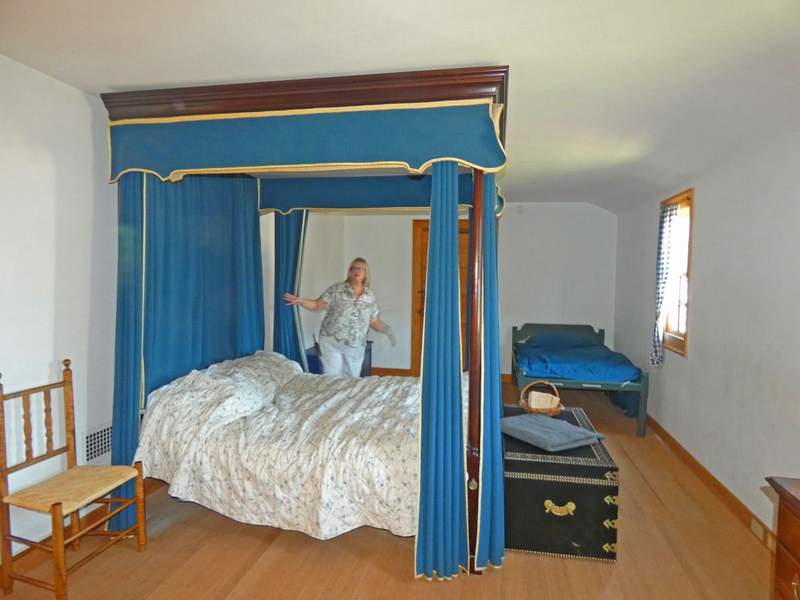
Why go: Ferry Farm was where George Washington lived from age six to 22. The accurate replica we visited was built over the foundations of the house, which was built in 1727. George’s father, Augustus, bought it at auction in 1738. Augustus had two sons by a first marriage, so when he died, Mary never remarried, so George would inherit under English law.
What not to Miss: The house is simple but remains well furnished from Agustus’s wealth. Our guide told the story of how George grew up strapped for money. Mary’s bedroom is beautiful. Don’t miss the surveyor tools George used when he learned surveying as a way to get rich. Since surveyors saw lots of new places, by the time he’s 20, he’s acquired about 2,300 acres.
Historic Kenmore
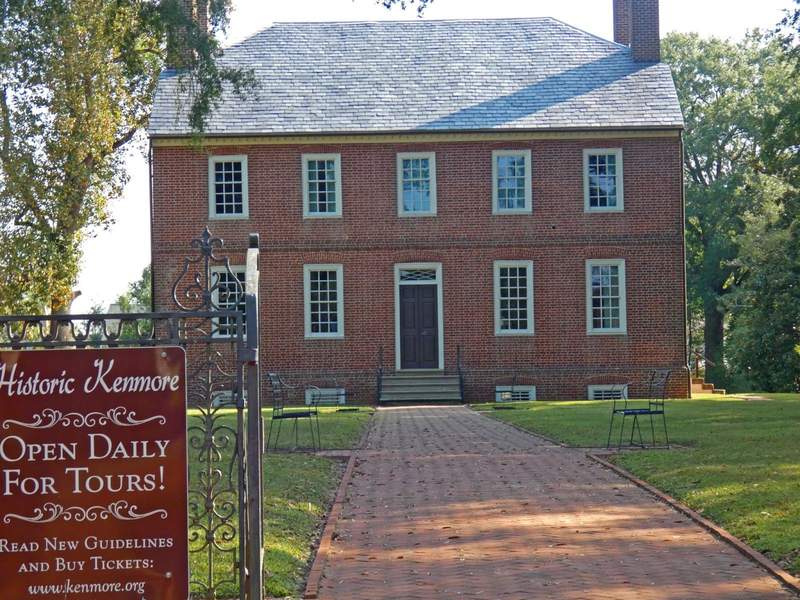
Why go: Kenmore, built in the 1770s on a plantation of about 1,300 acres, is the home of Washington’s sister, Betty, and her husband, Fielding Lewis. It’s the last original structure and only brick structure on the site. Wooden slave quarters and other buildings did not survive.
What not to miss: Our guide pointed out the elaborately decorated plasterwork on the ceilings, crown molding and over some fireplaces. It’s the most elaborate of the three Washington homes in Fredericksburg. The paint called Prussian Green, made from oxidized tin, showed off the family’s wealth. Be sure to tour the museum and recreated kitchen.
Mary Washington House

Why go: Mary Washington House is where she spent the last 17 years of her life. Since life after his father’s death was hard, George has no attachment to Ferry Farm and wants to sell it, but Mary doesn’t want to move. Finally, he buys her a home near Kenmore and convinces her to move here. He visits here on his way to New York when he’s elected president and
What not to miss: Most of the furniture is not hers, but it’s all period and nearly identical to what she had. The teapot is the only piece downstairs that belonged to Mary. Her will is upstairs, and several other items of hers, a rinsing bowl you would use to rinse your glass in-between servings of wine, and a mirror made of tin with a thin layer of silver.
She Buys Travel Tip: Be sure to see the garden and what would have been the kitchen..
Hugh Mercer Apothecary Shop
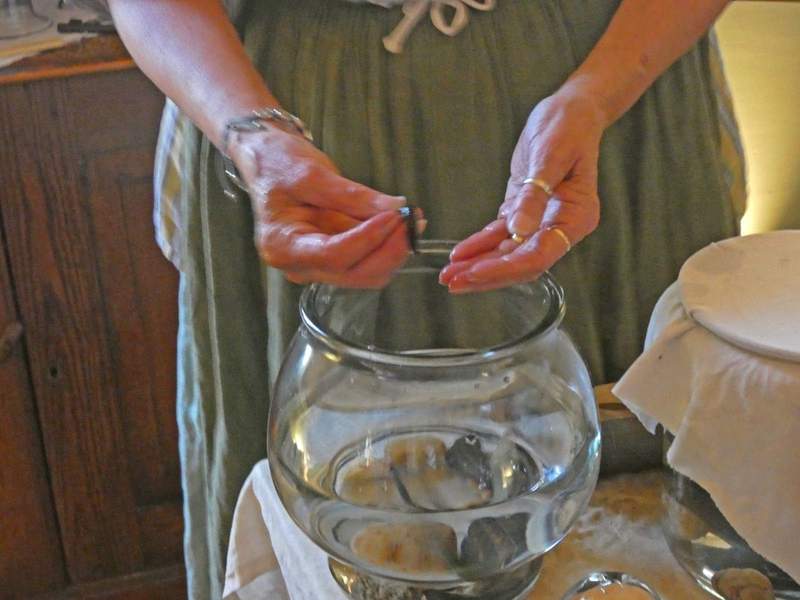
Why go: Hugh Mercer, a political refugee from Scotland, came to Fredericksburg at the invitation of George Washington. The Hugh Mercer Apothecary Shop was his doctor’s office and apothecary. He was a Revolutionary War general killed in the Battle of Princeton, 1777, and a great, great, great grandfather of US Army General George S. Patton, Jr.
What not to miss: The docents there give an in character presentation of the procedures you would have there. You’ll get to meet some live leeches, examine a saw used for amputations and learn how a tooth got pulled then.
Battle of Fredericksburg

Why go: Fredericksburg Battlefield Visitor Center tells about the battle where much of the fighting took place in the streets of town. Dec. 1862, Union soldiers under General Burnside met Confederates under General Lee. The Confederate victory came at a high price; 6,000 captured, dead or wounded, the Union lost 12,353. Chancellorsville, Wilderness, and Spotsylvania
What not to miss: Walk along the battlefield on the Sunken Road. There are signs telling the story. Parts of the stone wall used for protection are original. Fredericksburg National Cemetery is at the end of the Sunken Road. The Confederate Cemetery is next to the City Cemetery near Kenmore.
Historic Downtown
Why go: The whole 40-block Fredericksburg Main Street District is a hub for over 50 shops, boutiques, antique shops, art galleries and over 40 chef-owned restaurants.
What not to miss: Here are some unique places I enjoyed.
- Reclaim Arcade takes you back to the 1980s and 90s where you can watch a VHS tape in the 1980s Console Living Room, play a pinball machine or enjoy a snack and drink.
- Creative Cafe’ at PONSHOP Studio is where you can make a small art or craft project. I created some earrings at this cute little studio.
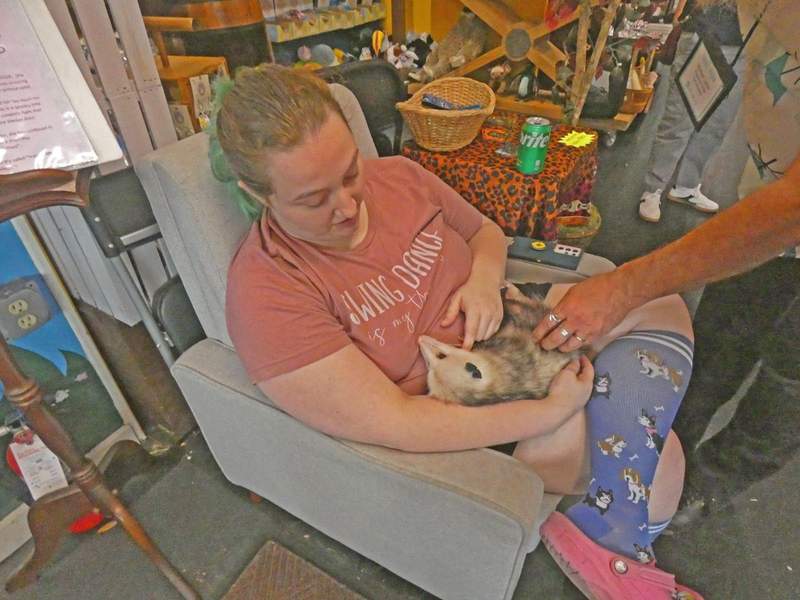
- Possum-bilities Gift Shop is where you can pick up a unique souvenir for that friend who couldn’t join you on this trip. But my favorite thing there is Eva, a possum that was born blind and is one of the shop’s ambassadors. I got to pet her and fell in love.
Dining
Why go: Fredericksburg has some of the most unique dining spots anywhere.
What not to miss: Here are a few I enjoyed.
- Eileen’s Bakery is housed in a 1833 church. She bakes all her pastries by hand, and you can’t go wrong with any of them. I had the Cherry Danish, and it had me drooling. It was so good.
- Mason Dixon serves scratch‑made comfort food Southern style, and breakfast all day.
- Tapa Rio mixes Latin and Italian cuisine while dining with a view of the Rappahannock River. I really liked that they offer a selection of tapas-style small plates and a wood-fired pizza, among other choices.
- Maggie’s offers a fun treat besides their sandwiches and homemade sodas, a History Lunch. Matt Culwell told us the history of Maggie’s, formerly a grocery and shoe store, and showed us artifacts dug up in the outdoor patio while we enjoyed a sandwich and soda. I loved the Italian sub and the root beer.
- Foode is an upscale Southern cuisine restaurant in the National Bank building, so we got to eat in the vault. I had their most famous dish, Rosie’s Fried Chicken Sandwich. The upper floor of the building was the Taliaferro residence, from where John Washington fled across Union lines to freedom during the Battle of Fredericksburg.
- Orofino is an Italian dining experience with Master Chef Danilo Orofino. Since he is from Palermo and trained there, he knows the authentic regional recipes he makes from scratch.
- Carl’s is a locally loved frozen-custard stand.
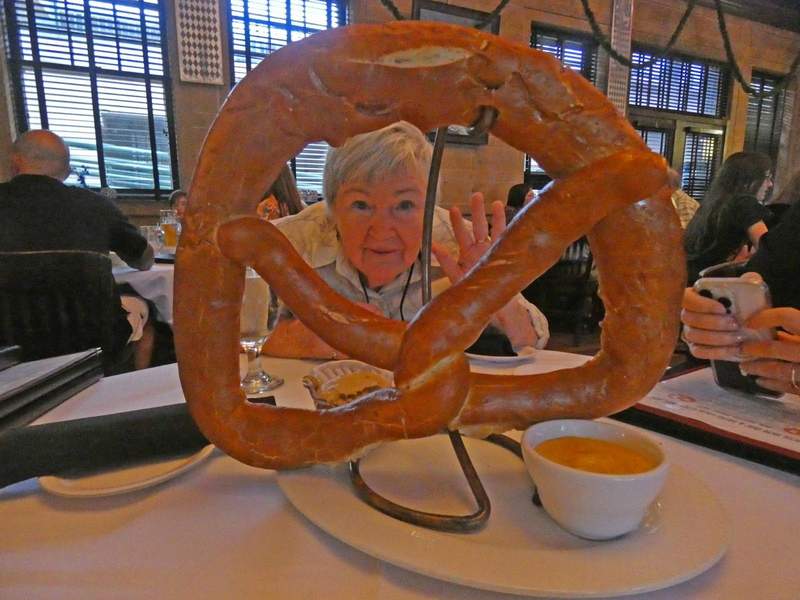
- Alpine Chef, an authentic German restaurant housed in a historic train station. The ambience is so old-world, you feel you are in Germany. We had the October Fest, and tried a lot of dishes. I’d suggest one of the sample plates, and definitely a pretzel.
- We did a bourbon tasting at Ironclad Inn & Distillery before our ghost tour. The inn is also a B and B and housed in a 1793 building. It’s Fredericksburg’s longest continuously operating inn since 1932, offering “B&B&B” Bed, Breakfast, and Bourbon. Their Stable Block Bourbon Room is open to both inn guests and the public.
Courtyard Marriott
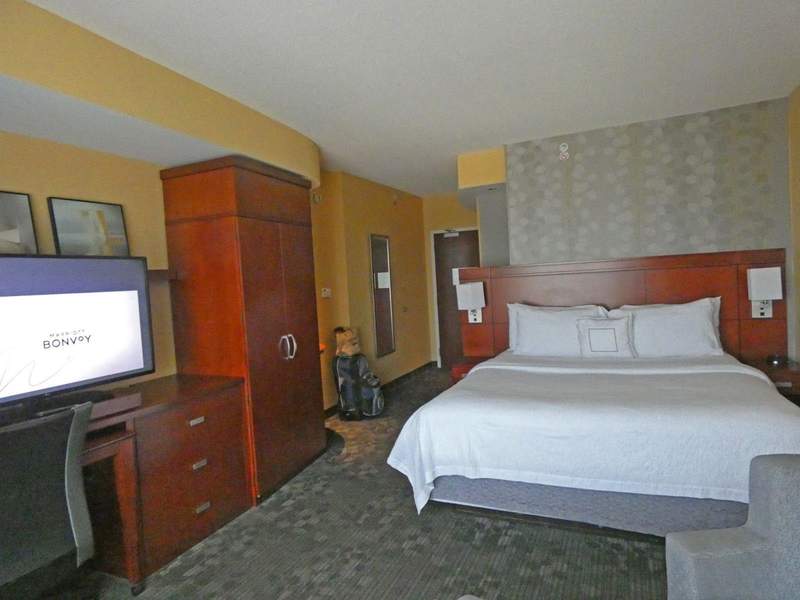
Why go: Courtyard Marriott offers a comfortable stay in the heart of the Historic District, and the rooms are spacious and comfortable. The parking lot is right next to the Visitor Center.
What not to miss: The hotel has The Bistro for a quick snack. There’s a pool and fitness center.


Leave a Reply