


The University of Michigan is one of the country’s top universities, highly ranked in many areas, and yes – they were the 2023 National Champions in college football as well. Whether you’re visiting the school as parents of a prospective or current student, an alumnus, or simply to explore Ann Arbor, there’s a great deal to see and do.
The University’s Central Campus is almost indistinguishable from downtown Ann Arbor. Unlike other colleges, the buildings here are not set within a separate campus area but interspersed throughout the downtown. Many of the university’s buildings are open to the public and its world-class museums are free to visit and tour.
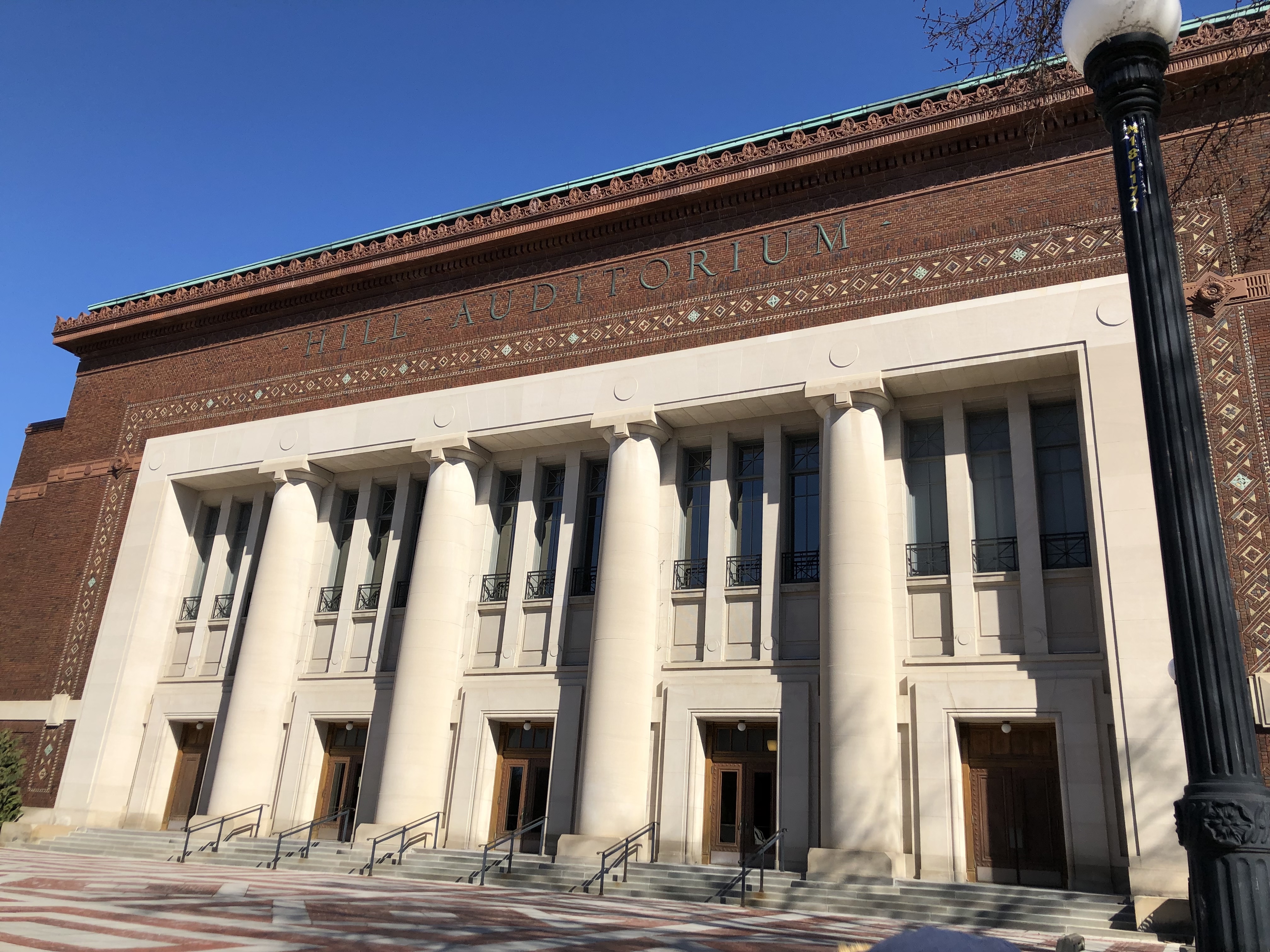
One of my favorite things to do when I visit campus is just to walk around and explore. There’s a fun energy on campus, especially during the school year when students are around. In the summertime, the atmosphere is quieter, but that can be a good time to visit with everything less crowded. The diag is a great spot to walk through or hang out to people watch and enjoy the outdoors. Many activities and events take place there as well. Most of the buildings on central campus are what I think of as ‘traditional’ red brick architecture. The Michigan League, Michigan Union and Hill Auditorium are some of the Central Campus buildings you don’t want to miss on a walking tour when visiting the University of Michigan.
The U of M bell tower contains a 53-bell carillon that chimes every quarter hour. Music students also often perform on the carillon, providing free concerts. There is a second carillon inside the Lurie Tower on the university’s North Campus as well.
1. Take a Tour of The Big House
- What is it: With a seating capacity of 107,601, the University of Michigan Wolverines football stadium, aka “The Big House”, is the largest stadium in the United States and the second largest stadium in the world. It holds the home attendance record for the NCAA, set with 115,109 fans in 2013.
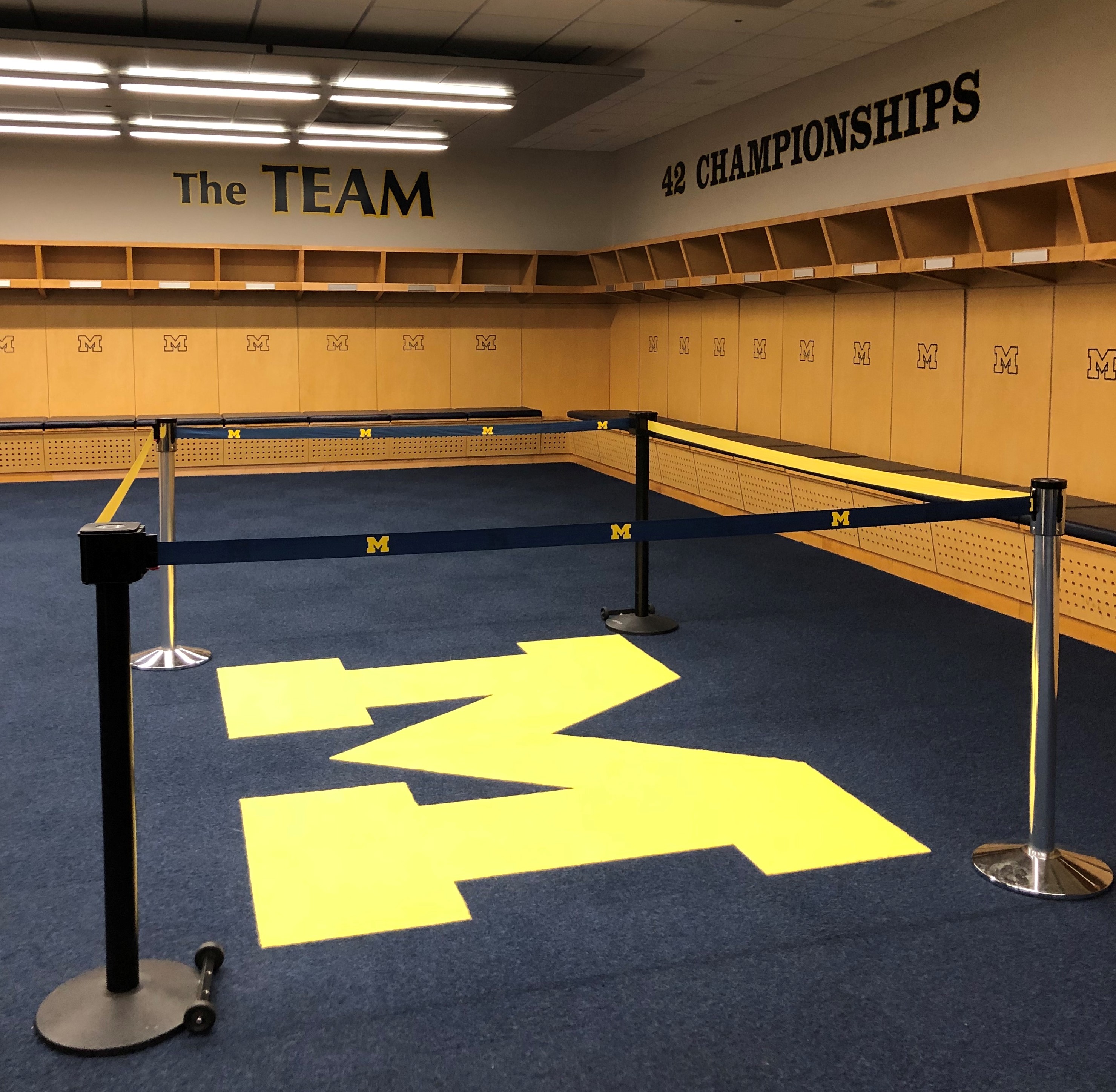
- What do they offer: Unless you have tickets, you can’t enter the stadium on game days. On non-game days, you can get a 60-90 minute guided tour. The tour includes areas not usually open to the public, like the press box and home locker room.
- How accessible is it: There is wheelchair-accessible seating available, but be aware that for regular seating there are a lot of stairs.
- What was my experience: The tour takes you through the tunnel right down onto the field, which is an amazing experience. Standing in the middle of the field surrounded by tens of thousands of seats is just surreal. Former Wolverine players like the Patriots’ Tom Brady and President Gerald R. Ford walked the same halls and tunnel in this stadium. For game days, note that the seats are metal benches, so it’s helpful to bring a foam cushion or blanket (no stadium chairs allowed), especially if it’s cold out. The seats are in very close quarters! You are not allowed to bring any bags at all into the stadium (other than for medical supplies). There are metal detectors. No outside food or drink is allowed, but there are concessions, including (as of 2024) alcoholic beverages. Two large screens (one at either end of the field) show all of the up-close detail during the game. One tradition is that in the fourth quarter, the song Mr. Brightside is played and the entire stadium joins in to sing along.
SheBuysTravel Tip: Skip the airport stress — Lyft’s On-Time Pickup Promise guarantees your scheduled ride shows up within 10 minutes of your pickup time. If it doesn’t? You’ll get Lyft Cash. You can schedule up to 90 days in advance and even lock in your rate. Use code SBT25 to save 25% off ONE scheduled ride to the airport.
2. Experience Art at UMMA
- What is it: The University of Michigan Museum of Art offers exhibitions, programs, and educational opportunities for people of all ages. They have two floors plus a mezzanine level, with an auditorium and classrooms on the basement level.
- What do they offer: Items from their permanent collection are on display as well as a variety of temporary or traveling exhibitions and events. Permanent exhibits include art from China, Korea, America, Africa and Europe. Admission to UMMA is free for all ages and the museum is closed on Mondays. You can bring in backpacks, purses or other types of bags. Group tour options are available. They do have a cafe and food and drink are allowed on the first floor.
- How accessible is it: They have sensory kits available for those who need them. The museum is wheelchair and stroller accessible.
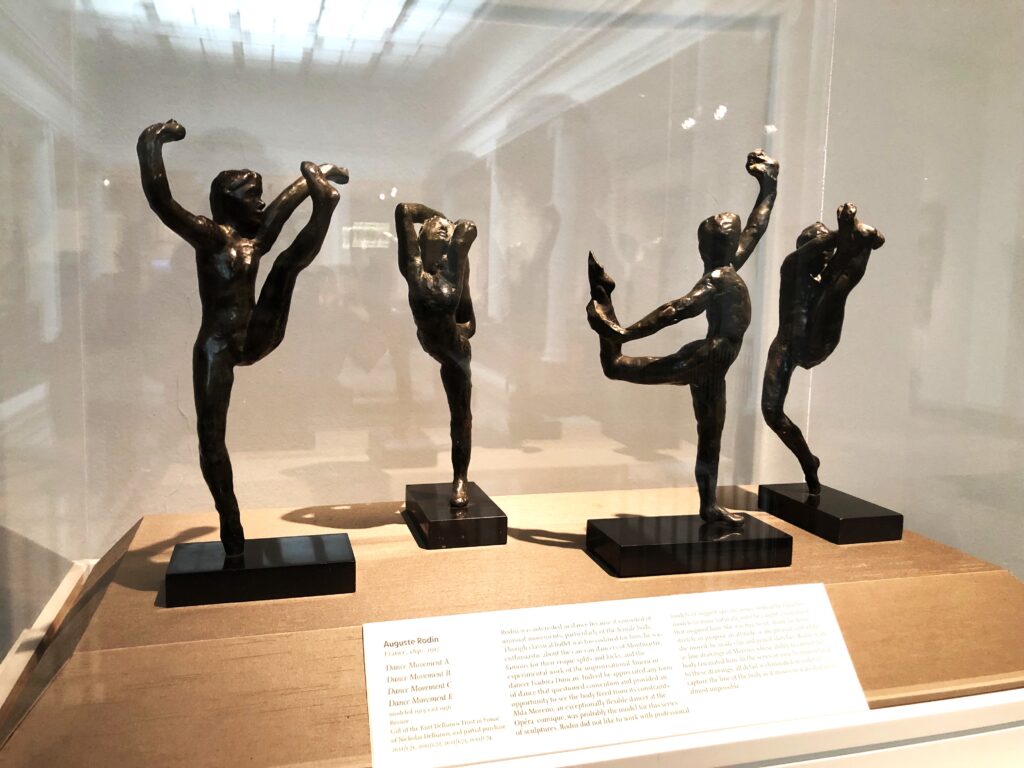
- What was my experience: I love wandering through art museums and UMMA is a fun one to explore. I really liked the Intuit art exhibit that was there when I visited and the Asana Warrior sculpture made by Cambodian artist Ouk Chim Vichet out of pieces from decommissioned AK-47s is extremely thought-provoking. It was part of a project called Peace of Art. Another one of my favorites was the set of four Dance Movement sculptures by Auguste Rodin. I enjoy that UMMA has a good mix of art from all over the world and in many different media. And I definitely appreciate that it’s free to visit!
3. Explore Outdoors at The Arb

- What is it: The Nichols Arboretum, known to locals as “The Arb”, is an open-air, natural space containing displays, gardens, trails, and a visitor center over 128 acres. It opened in 1907 and contains over 400 species of plants and trees. The Arb is open every day from sunrise to sunset and admission is free. The visitor center is open seasonally.
- What do they offer: One of the most popular attractions at The Arb is their seasonal peony garden, with peak bloom generally in late May through early June. Over 10,000 flowers can be seen at peak bloom and it’s an annual spring pilgrimage for many visitors. There are several other gardens, including a shrub collection. The Arb is comprised mainly of six separate areas, each with unique things to experience. There are just under 3.5 miles of scenic trails that connect all three entrances to The Arb and go through many important areas, including the peony garden and along the Huron River. Another popular event is the annual Shakespeare at the Arb, which runs throughout the month of June. The performance does require walking up to three miles to different areas within The Arb, incorporating hilly terrain, steps, grass and mulch.
- How accessible is it: The Arb is reasonably accessible, with all public buildings being wheelchair accessible and accessible parking available. Wheelchairs and a trailchair are available for use by reservation. There are some accessible picnic areas and patios. The trails are generally compacted gravel or paved and many have slopes and clearances to allow for wheelchair access. Shakespeare in the Arb usually offers at least one performance with ASL interpretation. There are golf carts available to assist with transportation to the various locations for each performance, but this must be reserved at least 24 hours in advance and is available on a first-come,first-served basis.

- What was my experience: My daughter performed in Shakespeare in the Arb for two seasons. The first year had beautiful weather and the Peony Garden in bloom as well. There is definitely a ton of walking, so be prepared to hike up and down hills and steps. You can either sit on a blanket or in chairs that you bring and carry with you. We chose the blanket option since blanket patrons sit in front of the chairs and it’s easier to carry a blanket. Having done that once, I would definitely recommend bringing a chair if you’re able to carry one. The ground gets very uncomfortable after a period of time! And there’s not always enough space left by the chair-carriers to accommodate everyone’s blanket in every location. The second year, it rained. They do perform outdoors if at all possible, but when the weather is dangerous or too difficult for outdoors, they perform instead in the Keene Theatre. The benefit is that you don’t have to get up and move, but it does lose something indoors, even though everything else is the same. My daughter has also lived near The Arb and it’s a favorite spot of hers to hang out in to read and relax.
4. Examine the Natural World at UMMNH

- What is it: The University of Michigan loves its acronyms and this one stands for the U of M Museum of Natural History. The museum is open year-round (with reduced hours in the summertime) and is closed on Mondays. Admission is free.
- What do they offer: You can wander through traditional exhibits encompassing everything from dinosaurs to minerals. The museum also has a planetarium and offers science demonstrations. There are two massive, life-sized mastodon skeletons (a male and a female) and you can also journey through four billion years of the history of life on Earth. There are locations where you can watch actual university researchers and scientists at work.
- How accessible is it: The museum is wheelchair-accessible. Wheelchairs are available for use and there are dedicated wheelchair spots in the planetarium. Many of the displays are touchable. The Personal Room is a quiet space available if someone in your party becomes overstimulated and sensory tools are also available to check out.
- What was my experience: I’ve been to several natural history museums but this is one of my favorites. There are so many areas with ‘Please Touch’ signs and as a lifelong Michigander, I really enjoyed the Exploring Michigan exhibit. You can walk through an example of what a cell looks like and the Life Through Time exhibit is a unique way to explore the history of the natural world on Earth. The mastodons in the entryway are massive and you can even step into an actual mastodon footprint. My oldest is a meteorologist so I really liked their exhibit about climate and weather. The museum also produces a lot of videos and my oldest starred in one when they were a student at the university.
5. Play and Learn at the Hands-On Museum
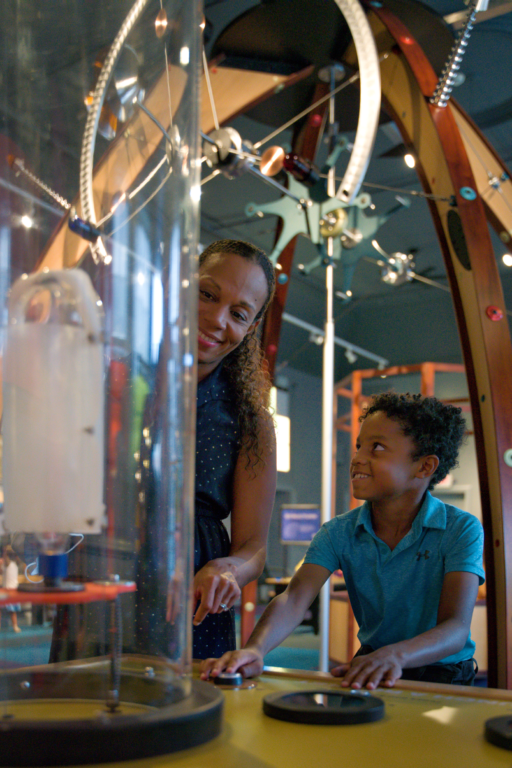
- What is it: The Hands-On Museum is a children’s museum that has ten different areas to explore and play in. The original museum was housed in a historic brick firehouse and then expanded to now include over 40,000 square feet of space on four floors. They are open every day except Mondays and tickets cost $16 for adults and kids 2+. Museum members and babies under the age of two are free.
- What do they offer: Their ten different interactive galleries include one specifically for preschoolers as well as their STEAM park, inspiring kids in the STEAM disciplines of science, technology, engineering, arts and mathematics. Kids can explore all about Light and Optics and experience what a country store in the 1930s was like. Other galleries explore water, your body and dental care. The museum hosts birthday parties (for a cost) and also offers camps and other community activities and events.
- How accessible is it: Free sensory kits are available and there are specific quiet hours offered for families whose kids need them. The museum is wheelchair accessible with elevators to all four floors. It is also verified as accessible through Wheel the World.
- What was my experience: We visited when my kids were younger and they had a complete blast. They absolutely loved the oversized foam blocks and also spent a lot of time in the H2Oh! exhibit playing with water. My oldest is on the autism spectrum and spent a lot of time creating words and designs on the geoboard, stretching rubber bands over nailheads in different directions. They played with giant soap bubbles, learned about Morse Code, and explored a full-sized ambulance. It’s been a while since we’ve been there and my kids are now grown, but I have a baby nephew who will be old enough soon and they live in Ann Arbor, so I’m sure we’ll spend plenty more time there and explore everything that’s changed since our last visit.
6. Discover Nearby Ypsilanti
- What is it: On any University of Michigan visit, don’t miss the chance to hang out in neighboring Ypsilanti. The town has a “small town” friendly vibe, with plenty to see and do. To not stand out as an outsider, note that the ‘Y’ at the beginning of the name is pronounced like an ‘I’, so the name is said as ‘ip-suh-lan-tee’.
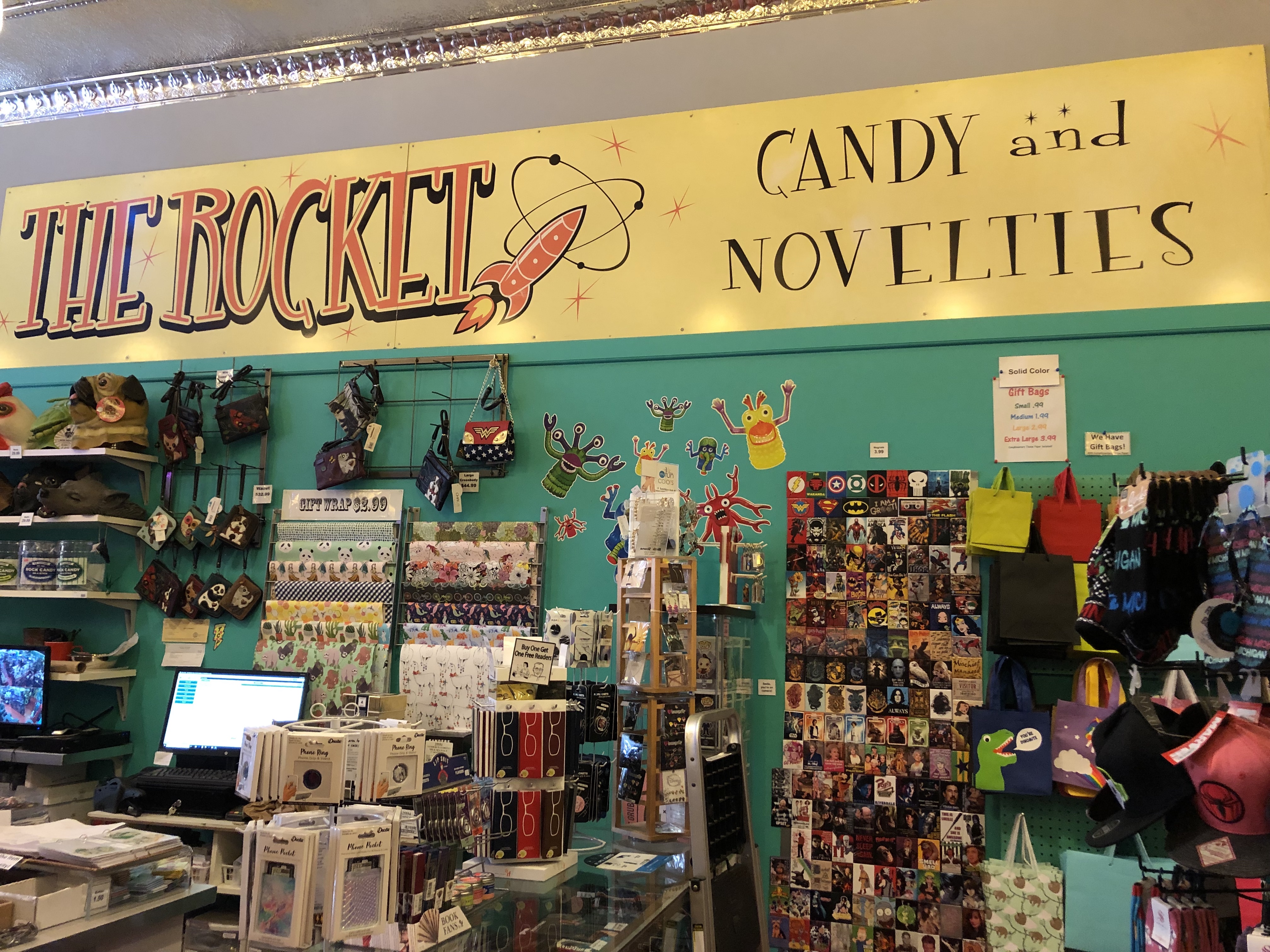
- What do they offer: Kids will love exploring the toys, candy and collectibles at The Rocket in downtown Ypsilanti. The Unicorn Feed and Supply store just down the street is a fun spot to explore and shop as well. Ypsi’s historic Depot Town is also a great place for shopping. Don’t miss The Eyrie, where you can find all kinds of Michigan-made artisan goods, artwork and crafts. Dining options include Aubree’s Pizze and Sidetrack Bar & Grill in Depot Town as well as Ollie Food & Spirits, which offers a seasonally rotating menu of heartland favorites. Riverside Park connects the downtown and Depot Town areas, with 14 acres of outdoor space along the Huron River. We’ve walked through this park, but there’s also a bike trail and plenty of fishing spots. Little kids will enjoy the playground.
- How accessible is it: The City of Ypsilanti has been working on projects that have increased the walkability and accessibility of the area, including accessible parking, entrances and the Heritage Bridge at Riverside Park.
- What was my experience: We love The Rocket – my teens still beg to stop every single time we visit, and my brother buys all of their birthday and holiday gifts there. Our favorite spots to eat in Depot Town are Aubree’s (my picky family’s top choice) and Sidetrack, where my vegetarian brother can find a great meal. My family has had a great time walking through Riverside Park with my brother and our mom.
7. Visit the Michigan Flight Museum
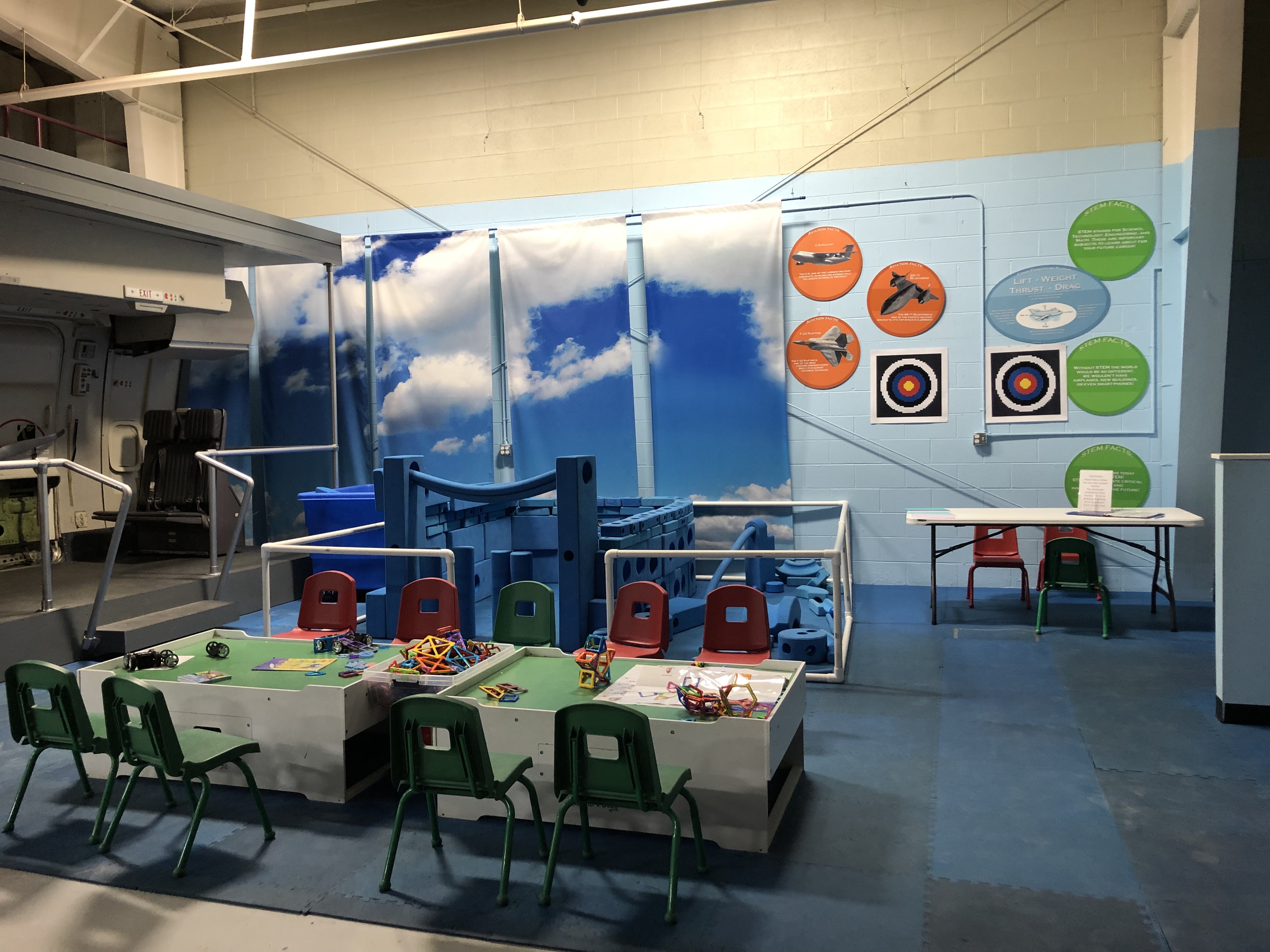
- What is it: The Willow Run Airport in Ypsilanti is the former home of the 3.5 million-square-foot Ford B-24 Bomber Plant. During WWII, this plant was the first in the country to use Ford’s innovative assembly line manufacturing processes for airplanes. The plant has since been demolished, but the Michigan Flight Museum (formerly the Yankee Air Museum) was able to save a 144,000-square-foot portion, which has been renovated into a new facility to house their collection of aircraft and other displays. The new museum opened in October 2022 with new exhibits. During the plant’s heyday, it produced one B-24 bomber every 55 minutes (25 bombers per day). The assembly line was a mile long and the plant had a workforce of 42,000 people. By the end of WWII, half of those workers were female – the original ‘Rosie the Riveters’.
- What do they offer: The museum has traditional displays and also offers historic plane rides, special events and air shows. They have historical aircraft from WWI up to the Gulf War. Exhibits include: Women Answer The Call, an AV-8A Harrier, and exhibits focusing on the Vietnam War, and both World Wars. They are closed on Mondays. Tickets are free for museum members or $13 for adults 18+. Kids under two are free and tickets for ages 3-17 and students cost $10. For an extra cost, you can book a flight in a B-25 Bomber, C-47 Transport or Huey Helicopter (see details below). Note that there is no cafeteria on site.
- How accessible is it: The website states that they welcome guests with disabilities and are, “…committed to providing the highest quality visit for each and every guest to the extent that we are able to do so”. They don’t give any further details.
- What was my experience: I haven’t experienced the new museum yet but was very impressed with the collections that the previous incarnation, the Yankee Air Museum, offered. I even got to go up in the air in one of the historic airplances, which was truly a once-in-a-lifetime experience.



Leave a Reply